What Is a Black Market Baby?
Montreal, Baby Brokers, Illegal Adoption, and the Lifelong Search for Truth
By Diana Kayla Hochberg
Originally published June 9, 2026 | Updated July 29, 2026
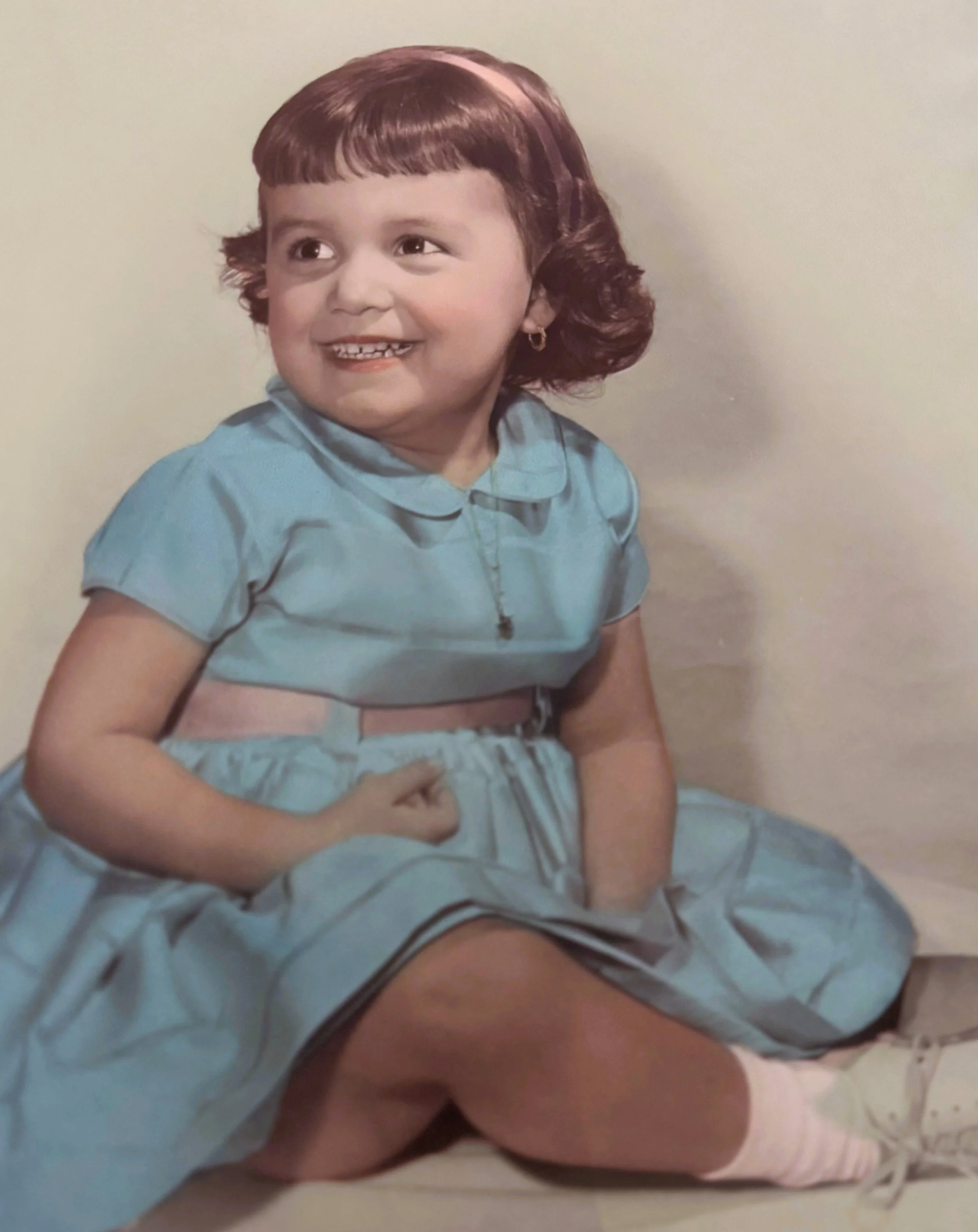
Childhood portrait of Diana Kayla Hochberg, author of Connected: Finding My Truth.
The term Black Market Baby can sound shocking. But behind those words are mothers who lost children, families who may never have known the truth, and babies who grew into adults still searching for answers.
I know because I am one.
I was born in Montreal in 1955 and brought to the United States as an infant on a false birth certificate. There were no adoption papers because I was never legally adopted.
This history is not abstract to me. It is the beginning of my life story—and the reason I continue searching for the truth.
What is a Black Market Baby?
A Black Market Baby is not simply an adopted child whose records were later sealed.
The term generally describes a baby transferred outside the legal adoption system. Money may have changed hands. A mother may have been pressured, deceived, or told that her baby had died. Records may have been changed, hidden, or destroyed. Adoptive parents may have been listed on a birth certificate as though they were the biological parents. In cross-border cases, a baby may have been taken into another country without a lawful adoption or proper immigration documents.
A legal adoption requires valid consent, oversight by a court or authorized agency, and an official record of the child’s placement. A black-market transfer avoided those protections.
Not every private adoption was illegal, and not every adoptive parent knew that a broker, doctor, lawyer, or agency had broken the law. Some adoptive parents were deceived too. But whatever the adults knew, the child was left to live with a false or incomplete identity.
Today, international authorities are more likely to use terms such as illegal adoption, illicit adoption practices, child trafficking, or child laundering. The Hague Conference on Private International Law defines illegal adoption as an adoption involving abuses such as the abduction, sale, or trafficking of children and other unlawful acts against them.
The Baby Scoop Era was not the same as the black-market baby trade
These histories overlap, but they are not the same.
During the Baby Scoop Era, particularly from the end of the Second World War into the 1970s, many unmarried mothers in Canada and elsewhere were pressured or coerced into surrendering their children. Maternity homes, hospitals, churches, adoption agencies, and social-service systems all played a part.
Some of those adoptions followed the law on paper, even when the treatment of the mothers was deeply unethical. The Senate of Canada’s report on forced adoptions documents that painful history.
Black-market cases went further. They bypassed the legal process, falsified identities, bought or sold babies, created fraudulent birth registrations, or moved children across borders illegally.
An adoption could be legal but coercive. It could be illegal because required safeguards were ignored. In some cases, it was both coercive and illegal. Understanding that difference helps us tell these stories honestly.
Montreal and the Canada-to-United States baby trade
As I searched for my own beginnings, I kept coming back to Montreal.
During the 1940s and 1950s, the city became an important center of the cross-border baby trade. Historians have documented several independent rings—not one single operation controlled by one person.
Maternity homes housed pregnant women and newborns. Intermediaries located unmarried women in vulnerable circumstances. Lawyers prepared false birth registrations or sought adoption orders using fraudulent information. Doctors and other professionals sometimes helped make the arrangements appear legitimate. Couriers then carried some of the babies from Canada into the United States.
Many of the mothers were unmarried French Canadian Catholic women. Many of the prospective parents were Jewish couples from New York and other American cities who faced religious matching rules, discrimination, long waiting lists, or exclusion from the legal adoption system.
Brokers exploited those conditions. The mothers and babies—those with the least power—carried the greatest risk.
Among the people publicly connected to the 1954 Montreal investigation were attorneys Herman Buller and Louis Glazer, along with baby courier Rachel Baker. Historical accounts report that all three were arrested. Buller was identified as a major arranger of documents and placements. Baker transported babies across the border and later served a limited jail term.
The cases against the different participants did not all end the same way. Gaps in the law and questions about jurisdiction made prosecution difficult.
These names are part of Montreal’s documented history. I cannot say that Buller, Glazer, Baker, or any other known participant was involved in my transfer because I do not have evidence proving that connection.
What I can say is that I was born in Montreal in 1955, carried into the United States on a false birth certificate, and left with no legal adoption record.
Did the trade end in 1954?
The answer is more complicated than a single date.
The Montreal-to-New York scandal exposed in 1954 was centered in the 1940s and 1950s. But the wider Canada-to-United States trade did not necessarily end when those arrests made the news.
Historian Karen Balcom’s book, The Traffic in Babies: Cross-Border Adoption and Baby-Selling between the United States and Canada, 1930–1972, follows cross-border adoption and baby-selling through 1972.
That research shows that the wider trade—and the conditions that allowed it to continue—reached into the early 1970s. It does not prove that every Montreal ring exposed in 1954 remained active for that entire period.
For me, that distinction matters. I was born one year after the major Montreal investigation. I was not born outside this history. I was born in the middle of it.
A friendship born from a shared history
Along the way, I became friends with Harold Rosenberg, another Black Market Baby whose story also began in Montreal. I write about Harold in my memoir, Connected: Finding My Truth.
My friendship with Harold reminded me that this history does not live only in court files, newspaper archives, and government reports. It lives in people—in the questions we carry, the truths we uncover, and the unexpected connections we make while trying to understand where we came from.
A Friendship Born from a Shared History

Harold Rosenberg, a fellow Black Market Baby whose story began in Montreal.
Dr. Karen Balcom’s research helped me understand the larger history surrounding my own beginnings. Through Dr. Balcom, I connected with Harold Rosenberg, another Black Market Baby whose story also began in Montreal.
Harold and I became friends. Both Dr. Balcom and Harold are part of my memoir, Connected: Finding My Truth.
That friendship reminded me that this history does not live only in court files, newspaper archives, and government reports. It lives in people—in the questions we carry, the truths we uncover, and the unexpected connections we make while trying to understand where we came from.
Elsewhere in Canada: the Ideal Maternity Home
Montreal was not the only Canadian location connected to the sale or illegal placement of babies.
In Nova Scotia, Lila Young and William Young operated the Ideal Maternity Home from the late 1920s through the 1940s. The home became associated with unlawful or irregular placements, including babies sent to families in the United States.
The Youngs faced several criminal and regulatory proceedings. Some allegations resulted in findings or penalties, while some of the most serious accusations did not lead to convictions. Karen Balcom’s study of the Ideal Maternity Home places it within the larger history of cross-border baby-selling.
Baby brokers and illegal operations in the United States
In the United States, some operations were built around one powerful broker, doctor, lawyer, or agency operator. They often depended on help from other professionals or public officials.
Bessie Bernard, also known as Elizabeth Weiner
Bessie Bernard was a Brooklyn baby broker convicted in 1950 in connection with a Florida-to-New York black-market adoption ring. Court proceedings described babies being obtained in Florida and placed with families in New York for large payments. Bernard and attorney Irwin Slater were convicted, and Bernard was fined.
Her conviction is documented. What came later is less clear.
An adoption-history collection identifies Elizabeth Weiner as Bernard’s maiden name and reports that she remained active as late as 1970. For anyone researching a placement believed to have occurred around 1959, both names are important search terms.
The available public court record does not fully establish the extent of her later activity. That is why I describe the later dates as reported connections, not as additional convictions.
For someone searching for the truth, a name in an adoptee registry or family file can be a valuable lead. It is a place to begin—but it is not the same as proof.
Georgia Tann
Georgia Tann ran the Tennessee Children’s Home Society in Memphis for decades. Children were taken from poor or vulnerable families, records were manipulated, and adoptions were arranged for payments far beyond ordinary fees. Political and judicial connections helped keep the operation running.
Tann died in 1950 before she could be prosecuted. The Tennessee State Library and Archives preserves records connected to the investigation and the closure of the Society.
Dr. Thomas J. Hicks
Dr. Thomas J. Hicks operated a clinic in McCaysville, Georgia. From the 1950s into the 1960s, he secretly transferred newborns to couples and issued birth certificates naming the receiving parents as the biological parents. The people affected became known as the “Hicks Babies.”
Many did not learn the truth until decades later. Some turned to DNA testing to search for their biological families. A&E’s historical account describes the operation and the search that continues today.
Spain
Spain’s stolen-baby history includes allegations and documented cases involving hospitals, doctors, maternity facilities, and members of religious orders. Some mothers said they were told that their babies had died when the children may instead have been transferred to other families.
This is another place where the exact language matters.
Dr. Eduardo Vela became the first person tried in connection with Spain’s stolen-babies scandal. In 2018, a lower court concluded that he had committed acts involving an unlawful transfer and the falsification of records. The court nevertheless acquitted him because it considered the case time-barred.
In 2020, Spain’s Supreme Court upheld the acquittal and said that illegal detention had not been proven. It would therefore be inaccurate to describe Vela as convicted.
Sister María Gómez Valbuena was formally investigated in separate cases, but she died in 2013 before the allegations could be tried. The claims against her were never resolved at trial.
That may sound like a small legal distinction, but it is not. In a history filled with missing and disputed records, we must separate what was alleged, what a court found, and what was never proven.
Ireland
Ireland’s history was more institutional than centered on one publicly proven broker. Mother-and-baby homes, religious organizations, hospitals, and adoption agencies held enormous power over unmarried mothers and their children.
The Irish government confirmed 151 cases of illegal birth registration in the files of St. Patrick’s Guild, an adoption agency operated by the Religious Sisters of Charity. In those cases, adoptive parents were registered as though they had given birth to the children.
The Government of Ireland’s official statement identifies the organization and confirms the number of cases. It does not assign all 151 registrations to one individual, and neither should we.
Guatemala
In Guatemala, private lawyers and notaries once controlled much of the international-adoption process. Investigations uncovered cases in which children were falsely declared abandoned, taken from their families, or obtained through payments, coercion, and forged documents.
Attorney Susana Luarca was prosecuted in the Primavera illegal-adoption case. Early reports described allegations and charges. Later case records and Guatemalan reporting document what happened next: Luarca was convicted and sentenced to 18 years and eight months for crimes including human trafficking, criminal association, and the use of forged documents.
The United Nations-backed International Commission against Impunity in Guatemala documented the case.
Cambodia
In Cambodia, international demand helped create profitable adoption networks. Some children presented as orphans had living parents or relatives.
American adoption facilitator Lauryn Galindo pleaded guilty in the United States to conspiracy to commit visa fraud, conspiracy to launder money, and structuring financial transactions in connection with Cambodian adoptions. Her sister, Lynn Devin, also pleaded guilty to related offenses.
The U.S. Department of Justice reported that false information about children’s identities and orphan status was used to obtain visas for them to enter the United States.
Different countries, the same lasting harm
The methods were not identical.
In Montreal, babies crossed an international border using false identities. In the United States, powerful individuals operated through clinics, agencies, legal offices, and courts. In Spain, allegations and documented cases involved hospitals and religious institutions. In Ireland, organizations controlled birth registrations and adoption records. In Guatemala and Cambodia, international demand helped support profitable networks involving lawyers, facilitators, and false orphan documents.
But across borders and across generations, the harm was painfully familiar.
Mothers lost children. Children lost their names, medical histories, nationalities, and family connections. Many adoptive parents were also deceived. Decades later, the babies moved through these systems are adults still trying to discover who they are.
For those of us who learned the truth late in life, the loss cannot be dismissed as missing paperwork. A false birth certificate can erase a family line, a medical history, a nationality, and the right to know the circumstances of your own birth.
I use the term Black Market Baby because it describes what happened to me. I was not legally adopted. I was carried across an international border under a false identity.
The term is difficult. So is the truth. But silence does not make either one disappear.
We were not paperwork. We were not secrets. We were not commodities.
We were babies—and we grew into adults who deserve the truth.
Continue the journey
My memoir, Connected: Finding My Truth, tells the personal story behind this research. It follows the questions, the DNA discoveries, and my journey across borders and generations to reclaim the family history that was taken from me.
Our experiences are not all the same. Adoption, donor conception, unexpected parentage discoveries, foster care, and kinship care each have their own histories. Yet many of us understand what it means to question the story we were given and to search for missing pieces of our identity, medical history, and biological family.
If you are an adoptee, a late-discovery adoptee, a Black Market Baby, an NPE—Not Parent Expected—a donor-conceived person, or someone raised through foster care or kinship care, your story matters.
If you are a mother who lost a child through coercion or deception, or a family member still searching for answers, you are not alone.
Selected sources and further reading
Hague Conference: Toolkit for Preventing and Addressing Illicit Practices in Intercountry Adoption
Karen Balcom, “The Traffic in Babies: Mothers, Midwives, and the Ideal Maternity Home”
Tennessee State Library and Archives: Tennessee Children’s Home Society Records
Iustel: Spain’s Supreme Court decision in the Eduardo Vela case
Government of Ireland: State response to illegal birth registrations
U.S. Department of Justice: Cambodian adoption facilitator guilty plea
About the author
Diana Kayla Hochberg is the author of Connected: Finding My Truth. Born in Montreal in 1955 and brought to the United States as an infant on a false birth certificate, she discovered decades later that she had never been legally adopted.
Her memoir follows the search that came next—the questions, the DNA discoveries, and the journey across borders and generations to reclaim the family history taken from her.
Today, Diana writes for adoptees, late-discovery adoptees, and families still living with the consequences of illegal and unethical adoption practices. She believes every person deserves the truth about where they came from.