This reflection is shared with permission from Patricia Ann Knight Meyer, founder of My Adopted Life and a leading voice in the adoption and DNA discovery community.
2025-2026 Must-Reads: Six Books That Crack Open Family Secrets and Tell Our Truths
Every year, I seek out books that speak our truth loud and proud. I am happy to report that 2025-2026 is delivering six remarkable books jammed full of adoption and DNA surprise truth-telling: Connected: Finding My Truth by Diana Kayla Hochberg, Adopting Privilege: A Memoir of Reinventing my Adoptee Narrative by Dr. Abigail K. Hasberry, Finding Loretta by Diane Wheaton, Sidework by Sasha Hom, The Adoption Paradox by Jean Kelly Widner, and No Finer Place: A Memoir of DNA, Deception, and Duality by L Michelle Tullier. Plus a bonus book at the end.
And what do you know, three of our featured authors will be joining me and presenting at the Untangling Our Roots conference in Atlanta this coming March 19 – 22.
Connected: Finding My Truth - When One Conversation Exposes Decades of Deception

Released on January 31, 2025, Connected: Finding My Truth by Diana Kayla Hochberg asks the questions that keep us up at night: What if everything you believed about your life was a lie? How far would you go to uncover the truth?
For Diana, it started with a casual conversation over lunch in Las Vegas. One remark. One thread pulled. And suddenly, nearly three decades of research unfolded into a labyrinth of secrets involving black-market baby adoption channels operating in the 1950s between Montreal and New York, corrupt government systems, the Mafia, and even the CIA.
Why This Book Hits Different?
In addition to exposing family secrets, Diana uncovers systemic corruption. She writes: "I came to understand that corruption wasn't an anomaly - it was the cost of doing business, accepted by every political party and high-ranking official."
As someone who was trafficked as an infant through black-market adoption channels in 1970, I recognize this truth viscerally. My black market trafficking was possible because systems designed to protect vulnerable children instead enabled their commodification. Diana's willingness to name the machinery of corruption, including the money, the power, and the deception, is exactly what our community needs.
Diana also brings deep genealogical expertise. Since 2017, Diana has been an active member of the British Columbia Genealogical Society and the National Genealogical Society, helping both adoptees and non-adoptees uncover and reconnect with their family histories. Born in Montreal and raised in New York, she understands that finding truth requires both emotional resilience and investigative rigor.
Diana blends genres brilliantly. Connected weaves memoir, mystery, genealogy, and investigative journalism into a narrative that reflects how these journeys actually unfold. Not in neat categories, but in overlapping waves of discovery, where each answer generates ten new questions.
The Journey Across Decades
What I appreciate most about Diana’s approach is her honesty about time and cost. The sacrifices required to discover her true identity. This isn’t a Netflix documentary where everything resolves in three episodes. This is the real timeline of deep genealogical research and systemic investigation.
Catch her at Untangling Our Roots in Atlanta in March: Diana will also be attending Untangling Our Roots in Atlanta this March, catch her Friday at 1:30 on the panel, “The Last to Know: How to Heal from Late Discovery” with moderator: Deidra Laverne McGee and Alicia Williams, Cynthia Boone, and Ridghaus.
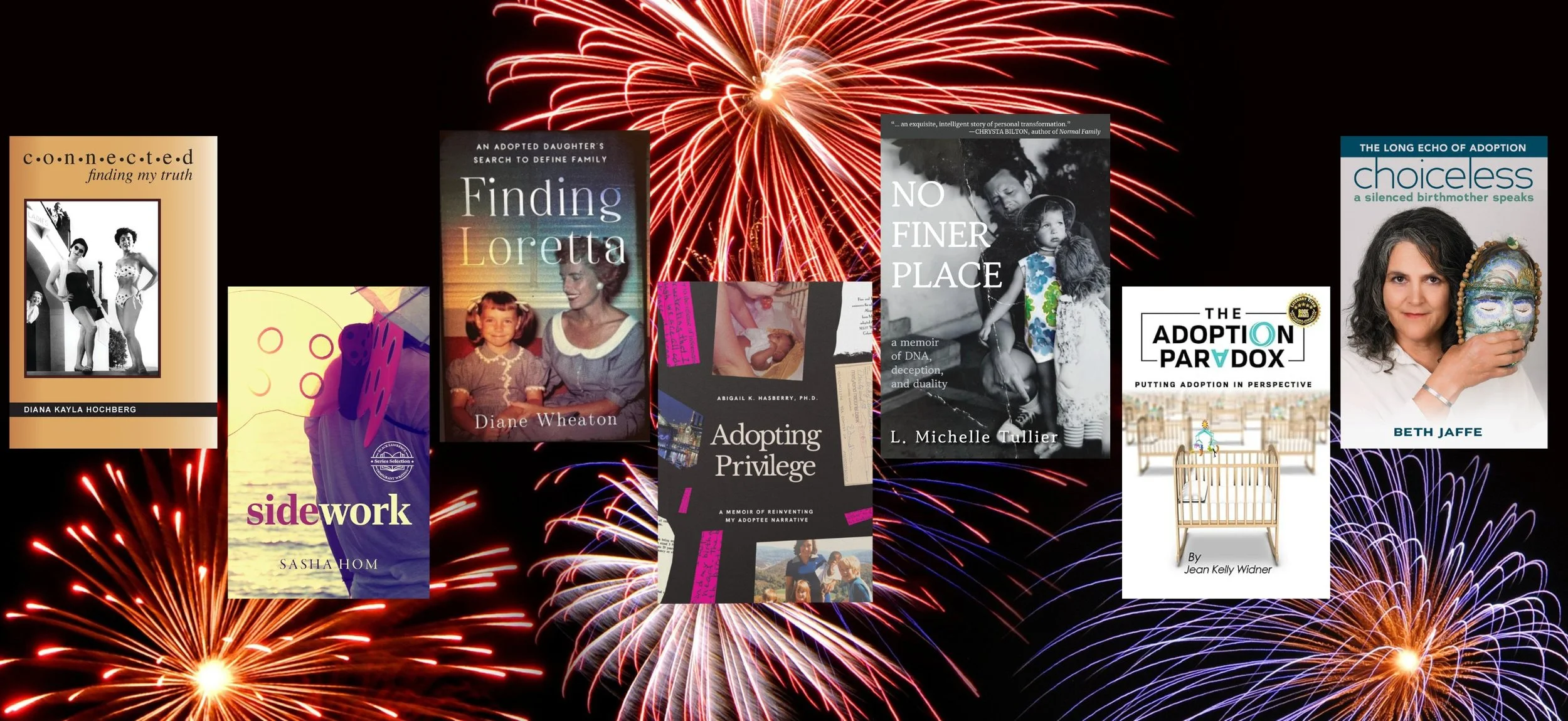
Finding Loretta - When Searching for Truth Uncovers More Than You Bargained For
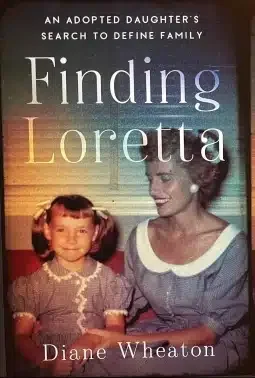
Published on March 4, 2025 by She Writes Press, Finding Loretta: An Adopted Daughter's Search to Define Family by Diane Wheaton asks the questions every adoptee carries: Who am I? Where do I come from? And what happens when the search for those answers collides with a devastating family secret?
For Diane, adopted as an infant during the Baby Scoop Era by a naval officer and his wife in Oakland, California, the journey didn't begin in earnest until she was forty-seven years old. But just as she begins meeting her biological family, her adoptive parents fall ill. And while caring for them, she learns they've been keeping a secret from her for over fifteen years—a revelation that transforms everything she thought she understood about loyalty, love, and family.
Why This Book Resonates
Diane confronts the impossible balancing act. Finding Loretta showcases the delicate dance all adoptees navigate: displaying loyalty to the family who raised them while pursuing the truth of their origins, managing fears of rejection while honoring the need for identity. This isn't theoretical—Diane lived it while simultaneously caring for aging adoptive parents and processing their long-held deception. The emotional complexity she navigates with such honesty makes this essential reading for anyone trying to understand what adoptees actually face.
She illuminates systemic failures without flinching. Secrets are embedded in the fabric of closed adoption at every level—systemic, institutional, and familial, with deep generational consequences. Diane examines how she was trapped in the shadow of an adoptive mother whose unaddressed grief and trauma manifested as gaslighting, while simultaneously being denied access to her own birth records by California's closed adoption system. The book exposes how these layers of secrecy compound trauma rather than protect anyone.
The narrative defies easy resolution. Memoirs often fall into two traps: the "poor me" story or the neatly wrapped happy ending. Finding Loretta avoids both. Wheaton crafts a memoir that honors the complexity of real people and real life—the messy emotions, the conflicting loyalties, the fact that finding answers doesn't automatically heal wounds. This authenticity is what makes the book groundbreaking.
A Story That Unfolds Like a Mystery
What sets Finding Loretta apart is how Diane structures her narrative with the pacing of a mystery—because that's exactly what the search felt like. Will she find her birth mother? What will she discover about her origins? And crucially: what was that fifteen-year secret her adoptive parents kept hidden? Readers will encounter unexpected twists, moments of abandonment and betrayal they won't anticipate, and ultimately witness a healing journey that feels earned rather than manufactured.
The battle between "right to know" and "right to privacy" takes center stage in Wheaton's gripping personal tale, making Finding Loretta not just one woman's story but a powerful argument for why adoptees deserve unrestricted access to their own birth records.
One reader described the experience best: "For much of this book I had been holding my breath." That's the journey Diane takes you on—one of resilience, hope, perseverance, and ultimately, the complex work of embracing both families who shaped who she is today.
No Finer Place: When Your Whole Life Gets DNA'd
Get the Book
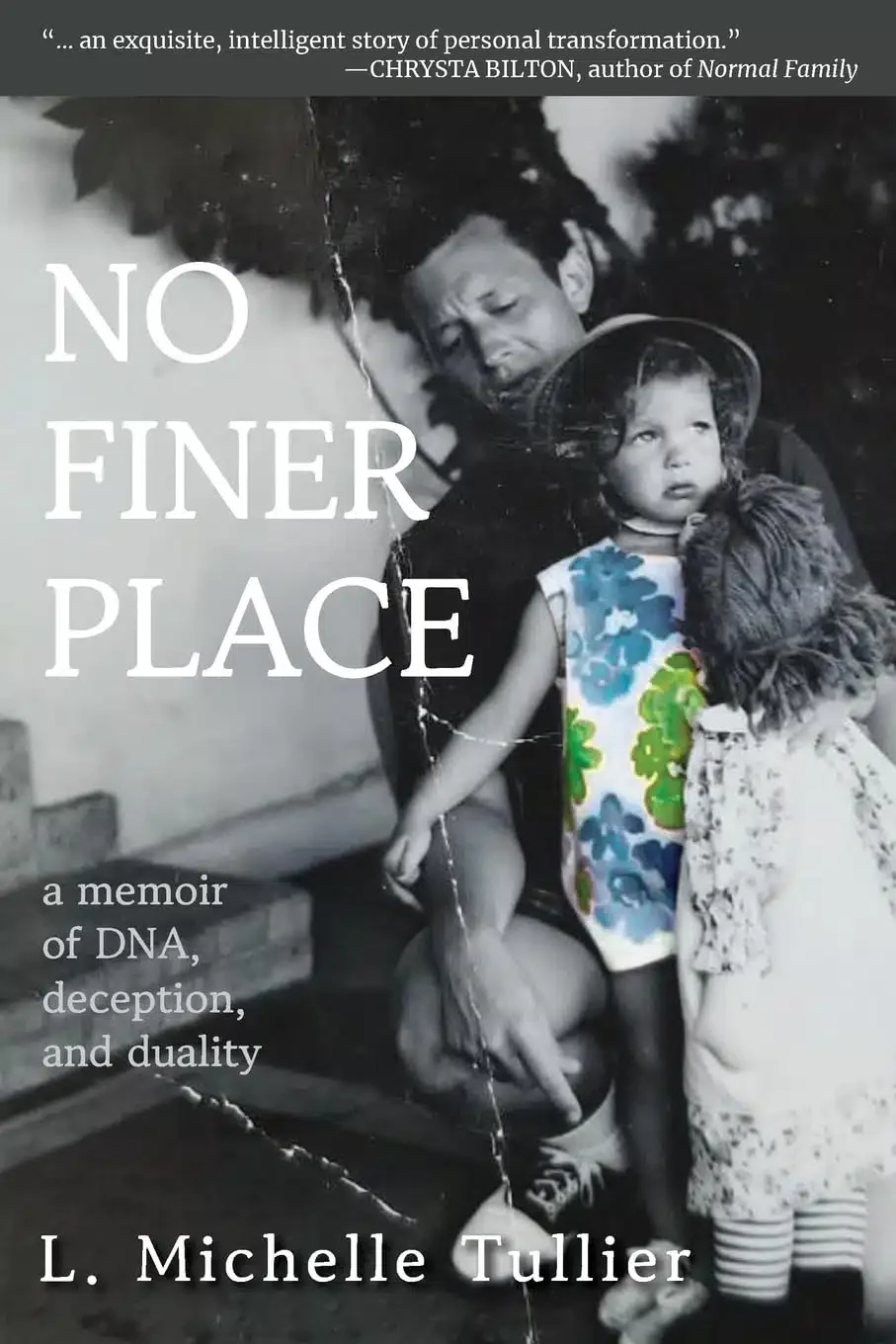
Michelle Tullier’s No Finer Place: A Memoir of DNA, Deception, and Duality (releasing February 3, 2026) speaks directly to everyone who thought they had their life figured out until a DNA test blew it all apart.
Michelle describes herself as “hyper-competent and hard-charging,” one of those “I don’t know how she does it” women. And I can verify that way back in 2023, when I met her over drinks at Untangling Our Roots, that was exactly my perception. Credentials include a PhD in counseling psychology from UCLA, BA from Wellesley, nine published self-help books, editor at Forbes Books
Life on lockdown with color-coded spreadsheets and perfectly managed projects. Until a midlife DNA surprise loosens that white-knuckle grip and teaches her what we all learn the hard way: DNA discovery can turn any carefully curated life upside down, inside out and sideways.
What a Journey!
Michelle’s honest about trying to treat her identity-shattering family secrets like just another project to manage. She thinks she can fool everyone, including herself, that she’s not falling apart. We’ve all been there trying to competence our way through trauma.
The book follows her geographic and emotional journey from Maine’s craggy coast to South Carolina’s Lowcountry, through Atlanta, Savannah, and Louisiana’s bayous and Bible Belt. She’s tracing her parents’ coming-of-age story against the Great Depression, World War II, racial segregation, and homophobia—expecting answers to “unfurl like Spanish moss off a live oak or float to the surface of a Sazerac.”
Instead, she discovers she’s been searching for all the wrong things in all the wrong places.
The Subtitle Says Everything
“DNA, Deception, and Duality,” that’s the trinity of genetic discovery, isn’t it? The science that reveals the deception creates duality in how we understand ourselves. Michelle explores “the universal longing to belong and our capacity to grow whole after life nearly breaks us.”
I particularly appreciate that Michelle brings her counseling psychology background to this work while acknowledging that professional expertise doesn’t immunize you from family secret fallout. She jokes that her transition from self-help author to memoirist gives new meaning to the “self” in “self-help.” That’s the kind of wry self-awareness that gets you through this journey.
Catch her at Untangling Our Roots in Atlanta in March: I am happy to report that Michelle will also be leading a session at Untangling Our Roots on Saturday at 11 am, join her for “Memoir Publishing Demystified.”
The Adoption Paradox: One Hundred Voices, A Bazillion Hard Facts
Get the Book
Jean Kelly Widner’s The Adoption Paradox (available now) brings nearly one hundred voices to the conversation. Not just adoptees, but birth parents, adoptive parents, therapists, and allies, all in one comprehensive volume.
While I have heard this book referred to as the Adoption Bible we have long been waiting for, this is the kind of 360-degree view our community desperately needed.
Jean, a domestic adoptee born in 1965, came from what she describes as a “mostly positive adoption experience.” Yet she still recognizes adoption’s inherent complexity. That perspective, acknowledging both love and loss, gratitude and grief, is exactly the nuanced conversation we need.
What Makes The Adoption Paradox Different:
It peels back the glossy exterior. This book sits with the uncomfortable truths. It examines domestic, international, and transracial adoptions alongside foster care experiences, refusing to pretend any path is simple, and it is jam packed with facts, statistics and good old fashioned research. This book is a treasure trove for adoption reform advocates and content creators looking for meaty eyebrow raising facts for their next instagram reel.
It names the paradox. Love and trauma. Joy and loss. Connection and separation. These contradictions live in our bodies every day. Jean’s collection validates what we know: you can be grateful for your family and grieve what was lost. Both things are true. And she delivers hard stats to back up every hard truth.
It calls for action. Jean explicitly addresses unethical practices and the lack of oversight in adoption systems. She connects individual healing with systemic change—exactly where this conversation needs to go.
Furthermore Jean is a fantastic friend and mentor and supporter of my publishing journey and I can’t thank her enough for the time and encouragement she has provided me along the way. She will also be presenting at Untangling Our Roots.
Catch her at Untangling Our Roots in Atlanta in March: Attend Friday at 1:30 for “Growing Beyond The Echo Chamber” with Jean, Rich Uhrlaub, and Pamela Taylor, and at 1:30 on Saturday for “The Power of Storytelling to Inspire Healing and Create Change” with Steve Osborne, and Elizabeth Barbour.
Adopting Privilege: Bring on the Triple Lens
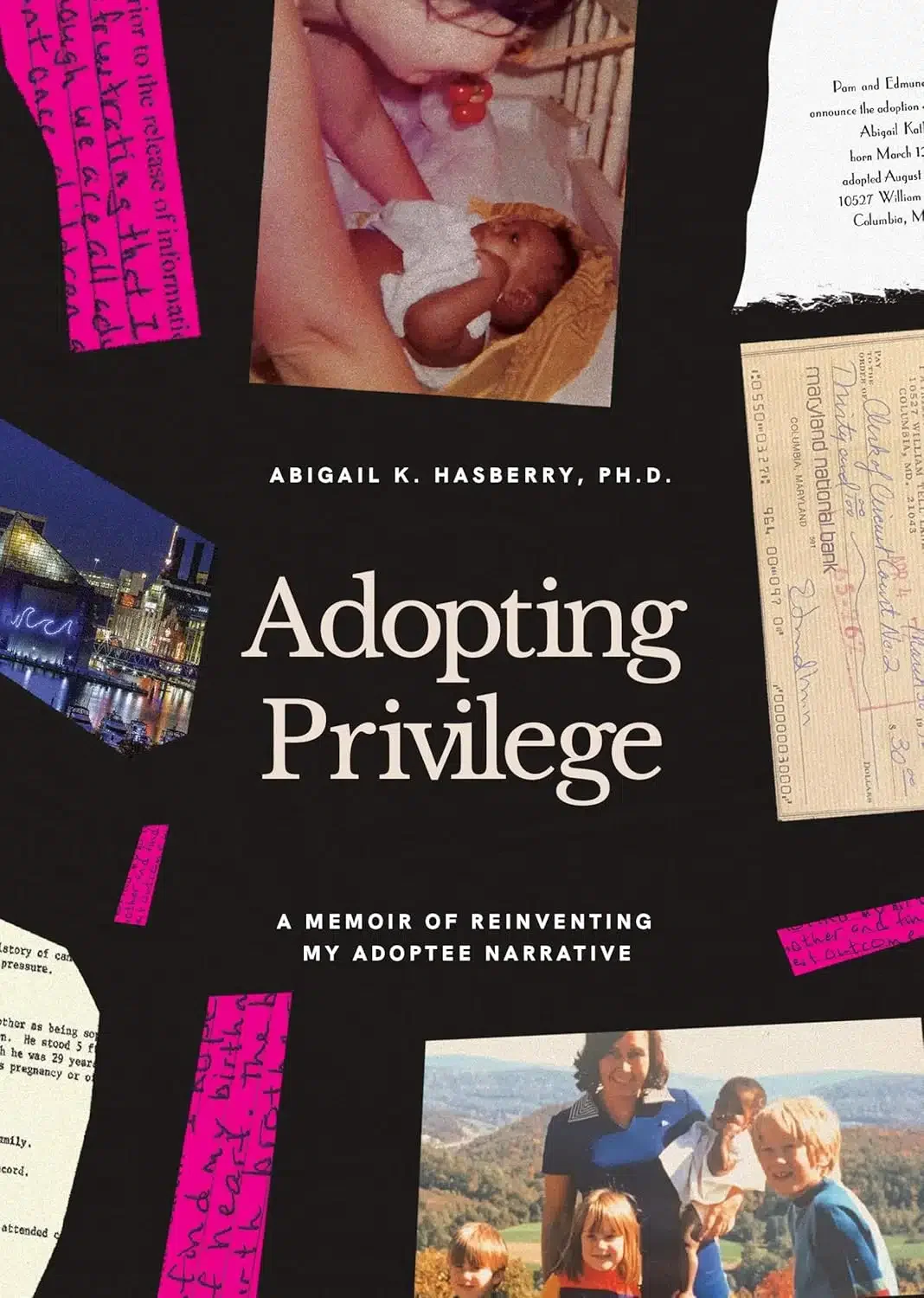
Dr. Abigail K. Hasberry’s Adopting Privilege: A Memoir of Reinventing my Adoptee Narrative (released February 18, 2025) hits different because Dr. Abigail brings a triple lens: transracial adoptee, birth mother, and licensed marriage and family therapist associate.
Why This Memoir Is Essential Reading:
Dr. Abigail names what we’re not supposed to say. The title alone—Adopting Privilege—challenges the narrative that adoption is purely about saving children. She examines how societal norms and systemic biases shape adoptee experiences, particularly for transracial adoptees who navigate racial identity formation in families that can’t mirror their lived experience of race in America.
Get the Book
She brings the credentials AND the lived experience. Dr. Abigail holds a PhD in curriculum and instruction, plus multiple degrees in African American studies, sociology, teaching, and counseling. She’s worked as a teacher and principal across diverse school settings. Her research focuses on identity development and the experiences of Black teachers in varied environments.
She centers cultural competency and social justice. Dr. Abigail advocates for more inclusive approaches to family dynamics and adoption policies. She pushes for adoptee voices to be central in discussions of how we support children and families, particularly across racial and cultural lines.
Sidework: When Adoptee Fiction Tells Truths Memoir Can't
Get the Book
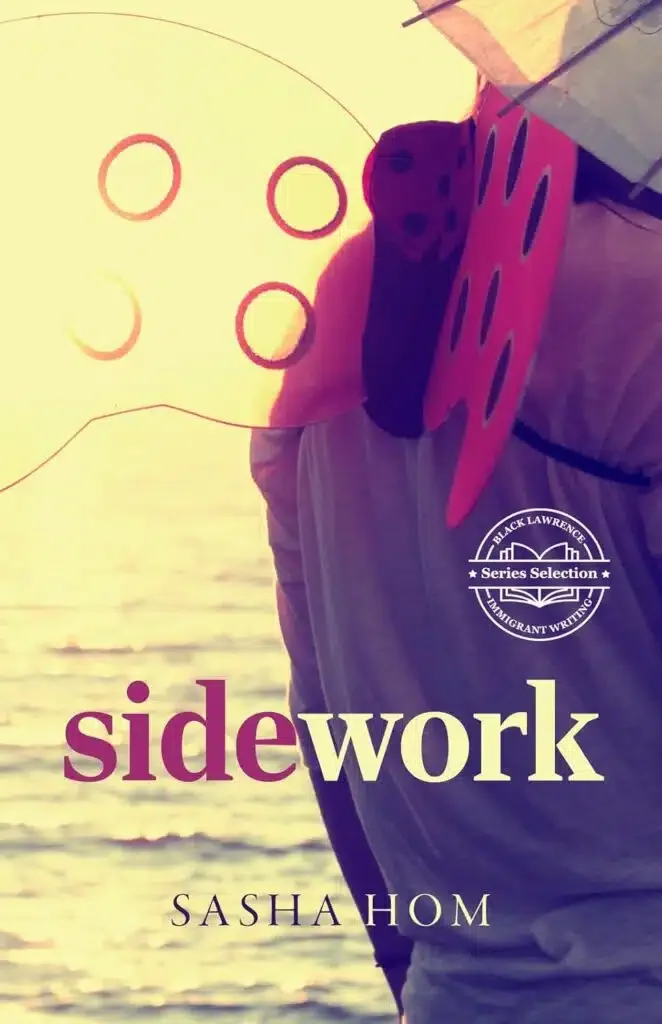
Here’s where 2025 gets really interesting: Sasha Hom’s Sidework (released March 18, 2025) is a lyric novella, not a memoir. But don’t mistake fiction for fabrication, this book tells adoptee truths that sometimes only narrative art can access.
I met Sasha at AWP this past spring, and her energy matches her work: grounded, radical, unflinching. She’s a Korean adoptee and mother of four who lives off-grid in Vermont on a 600-acre land co-op, running Bottomless Well, a refuge and laboratory for arts and ecologically oriented folks. She homeschools her kids, herds goats, and works on others’ farms. She’s earned an MFA from Warren Wilson College as a Holden Minority Scholar and received grants from Sustainable Arts Foundation and others.
Why This Novella Matters
I centers a homeless Korean adoptee mother. The protagonist waits tables at a cash-only diner tucked in the Redwoods during a busy Sunday shift. She’s homeless—her family lost their home when the intentional community where they lived off-grid in a canvas tent on three hundred acres was sold.
This is not the adoptee narrative we usually get. This is what happens when when motherhood and homelessness collide, when the myth of the “grateful adoptee” collides with economic reality.
It uses the mystic and mythic to explore the mundane. During her shift, the protagonist’s customers—rock stars, locals, the Grim Reaper himself—bring her face to face with larger questions of motherhood, suicide, environmental degradation, death, and belonging. Unnamed ghosts from far-off continents ask her what it means to be a good mother.
Hom marries the mystical with the mundane in ways that capture how adoptee identity actually feels: layered, atmospheric, haunted by questions we can’t quite articulate, visited by ghosts we can’t quite name.
It tackles everything at once. Immigration, colonization, climate change, homophobia, motherhood, adoption—Hom doesn’t separate these issues because they don’t separate in lived experience. For adoptees, especially transracial and transnational adoptees, these forces intersect in bodies, families, and survival strategies.
Why Fiction Matters to Our Movement
Sometimes memoir can’t do what fiction can. Memoir is bound by what actually happened; fiction can crystallize emotional truth in ways that transcend individual circumstance. A homeless Korean adoptee mother waiting tables while confronting the Grim Reaper and unnamed ghosts? That’s metaphor. That’s mythology. That’s the psychic landscape of adoption rendered visible.
Hom’s work has appeared in Exposition Review, Brink, The Millions, Literary Mama, Kweli Journal, and the Journal of Korean Adoption Studies. She’s been recognized with awards that honor both craft and activism. She understands that adoptee stories deserve literary artistry, not just therapeutic processing.
Bonus Book Coming Soon - Beth Jaffe's Choiceless: A Silenced Birthmother Speaks
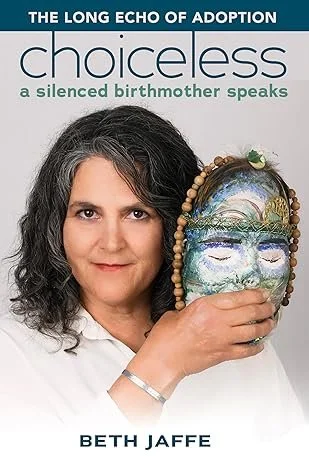
Choiceless: A Silenced Birthmother Speaks, releases for pre-order on January 6, 2026.
It is a birthmother’s untold story that dares to ask: What if everything we’ve been told about adoption, unplanned pregnancy, and reproductive rights is missing something crucial?
In this bold, funny, and unflinchingly honest memoir-meets-manifesto, Beth shares the side of the adoption story most people never hear—the one from the woman who gave birth and then disappeared, because that’s what the system expected her to do. But Beth didn’t stay quiet.
With a creative spirit, a dyslexic’s storytelling rhythm, and a gentle but unapologetic voice, Beth takes readers on a deeply personal journey through grief, identity, and transformation. Along the way, she exposes the often-overlooked consequences of framing adoption as a one-size-fits-all solution to unplanned pregnancy, infertility, and abortion debates.
Beth Jaffe is an author, artist, and changemaker. She reformed Montana’s adoption law and wrote Choiceless to transform global conversations around unplanned pregnancy, abortion, and adoption. Guided by compassion and creativity, she’s turning personal pain into universal purpose and offering a lifeline for those navigating shame, silence, and the long echoes of loss. Her memoir brings readers into the heart of a conversation too often whispered, avoided, or spun into oversimplified slogans.
For My Friends in the Adoption Community
If you’re still in the fog, these books offer mirrors. If you’ve been doing the work, they offer validation. If you’re trying to explain your experience to non-adopted people or those who haven’t had their genetic foundations shaken, hand them these.
Diana’s book will resonate with anyone investigating black-market adoption, anyone who’s discovered their adoption involved corruption or deception, anyone who’s spent years or decades trying to piece together a truth that powerful systems worked to conceal.
Jean’s book means you’ll likely find someone whose story resonates with yours—whether you’re navigating reunion, processing trauma, or simply trying to understand why adoptee grief hits differently than other losses.
Dr. Abigail’s memoir will speak to every transracial adoptee and will resonate with anyone who’s experienced adoption from multiple angles and knows the complexity can’t be captured in simplistic “rescue” narratives.
Michelle’s memoir will connect with anyone who’s discovered that the story they were told about their origins wasn’t the whole truth, or wasn’t true at all.
Sasha’s novella will speak to Korean adoptees, to adoptee mothers navigating what “good motherhood” means, to anyone who’s experienced economic precarity, to anyone who feels haunted by unnamed ghosts asking questions you can’t answer.
Beth’s memoir will remove the mask of shame so often worn by first mothers, especially those who have not yet found the love and support of community.
The Bigger Picture
What excites me most about all of these books is their timing. We’re living in an era where DNA testing has blown open sealed records, where adult adoptees are organizing politically, where birth mothers are reclaiming their narratives, where NPEs and late discovery adoptees are building community, where transracial adoptees are demanding that white adoptive parents do their racial justice work, where genealogists are helping us excavate truths that were deliberately buried, where adoptee artists are creating work that refuses to sanitize our experiences.
We all know DNA surprises are not always “gifts” and that adoption is not a “blessing.” We need messy, complicated, painful, healing, real stories. We’re ready to name the systems that enabled trafficking, corruption, and deception.
My Take
As someone working on my own memoir about being trafficked through black market adoption channels (WONDERLAND: A Black Market Baby’s Rise from Adoption’s Rabbit Hole ,July 2026), these books feel like essential conversation partners.
Diana’s willingness to investigate and name systemic corruption mirrors my own journey of understanding that my illegal adoption wasn’t an isolated incident but part of organized trafficking networks. Her twenty-nine years of research validates the lifetime it often takes to piece together truth when powerful systems worked to conceal it.
Jean’s collection of voices reminds me why community matters—we need to hear from people across the adoption constellation to understand the full impact. And it drives home how invaluable good research is to changing the narrative.
Dr. Abigail’s focus on how privilege and systemic bias operate within adoption resonates with my experience of being trafficked as an infant—my adoption was possible because systems failed to protect vulnerable children and because certain people held enough privilege to circumvent legal protections.
Michelle’s journey from control to surrender reflects every adoptee’s eventual recognition that we can’t research or competence our way out of grief, we have to move through it.
Sasha’s lyric rendering of adoptee motherhood and homelessness speaks to the precarity many of us navigate, the questions about what it means to mother, the way ghosts and grief show up uninvited during ordinary moments like Sunday breakfast shifts.
Beth’s unmasking of shame and pain is the memoir I wish I could have handed my first mother when I met her.
All six books refuse to shy away from systemic failures, family deceptions, and identity fractures. But they also offer something essential: hope. Not toxic positivity or “it all worked out” dismissiveness, but genuine hope rooted in acknowledgment. Healing is possible with the right support. Wholeness is possible after near-breaking. Truth is possible even when systems work against it. Justice is possible when we center adoptee voices. Art is possible from our pain. Change is possible when we speak truth together.
Add These to Your Reading List Now
Available now:
Connected: Finding My Truth by Diana Kayla Hochberg
The Adoption Paradox by Jean Kelly Widner
Adopting Privilege: A Memoir of Reinventing my Adoptee Narrative by Dr. Abigail K. Hasberry (February 18, 2025)
Sidework by Sasha Hom (March 18, 2025)
Coming soon (pre-order now):
Choiceless: A Silenced Birthmother Speaks by Beth Jaffe (Pre-release January 5, 2026)
No Finer Place: A Memoir of DNA, Deception, and Duality by L Michelle Tullier (February 3, 2026)
Whether you’re adopted, raising adopted children, processing a DNA surprise, investigating your genealogy, considering adoption, or working in child welfare, education, or genetic counseling, these books deserve space on your shelf. They’re the kind of books that change conversations, the kind we cite in reform meetings, reference in therapy sessions, share with genealogy clients, teach in creative writing classes, and pass along to people who need to understand what we’ve been trying to say all along.
Originally written by Patricia Ann Knight Meyer of My Adopted Life and shared here with permission.