Captain John Rufus “Jack” Ashby
My 7th Great-Grandfather | Virginia Ranger | Frontier Captain | 1707–1797
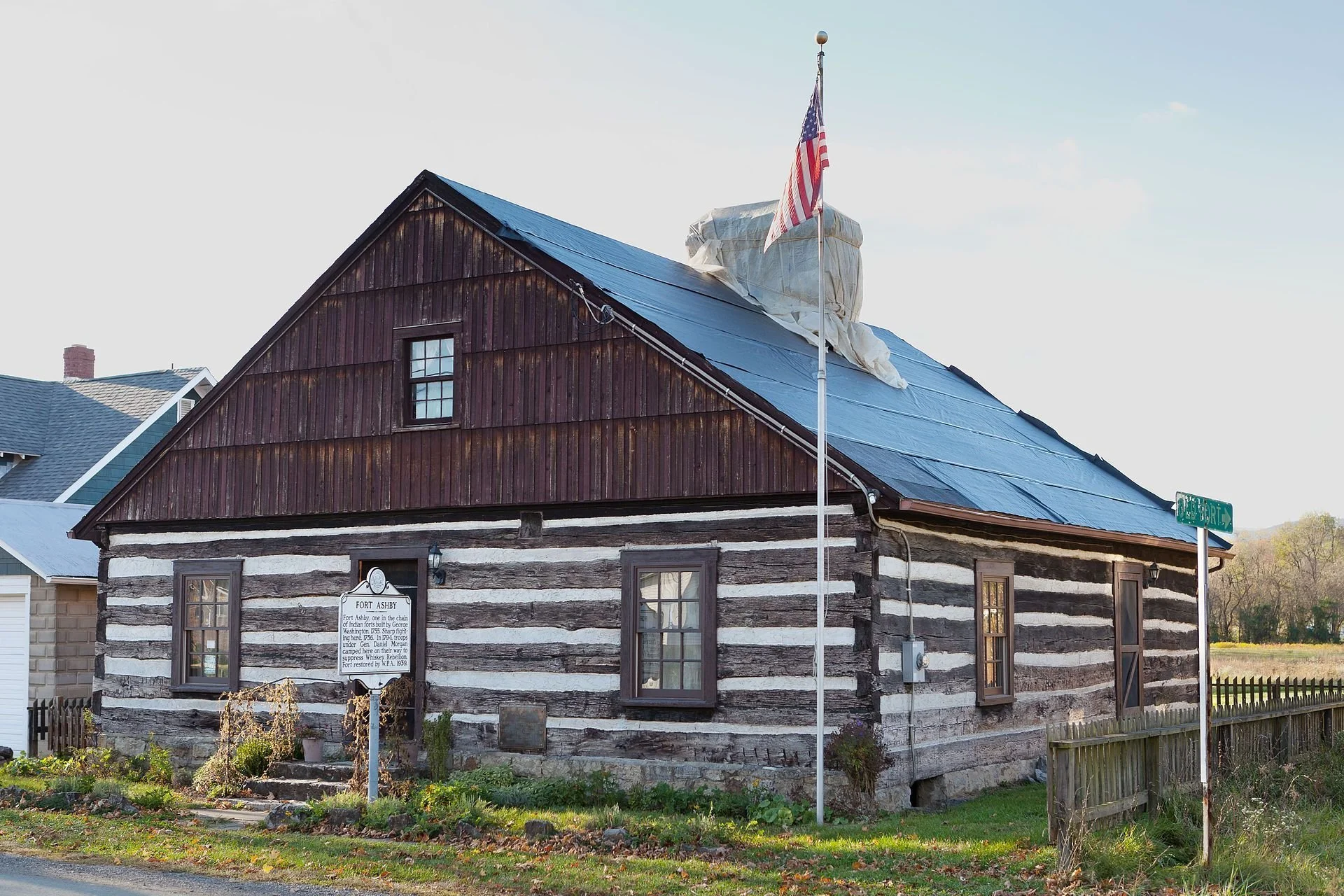
Fort Ashby in present-day West Virginia, named for Captain John Rufus “Jack” Ashby.
Every family tree has names that quietly wait to be rediscovered. Some ancestors leave only a few dates behind. Others leave stories that stretch across mountains, battlefields, rivers, letters, and generations.
For me, one of those ancestors is Captain John Rufus “Jack” Ashby, my seventh great-grandfather.
Born in colonial Virginia in 1707, John Ashby lived during a time when the American frontier was still being shaped by settlement, conflict, survival, and expansion. His life connects my family history to the Blue Ridge Mountains, the Virginia frontier, Fort Ashby, Ashby’s Gap, the French and Indian War, and even surviving correspondence from George Washington.
He was not simply a name on a family tree.
He was a farmer, a frontiersman, a soldier, a captain, and a man whose name still appears on the American landscape more than three hundred years after his birth.
The Ashby Line
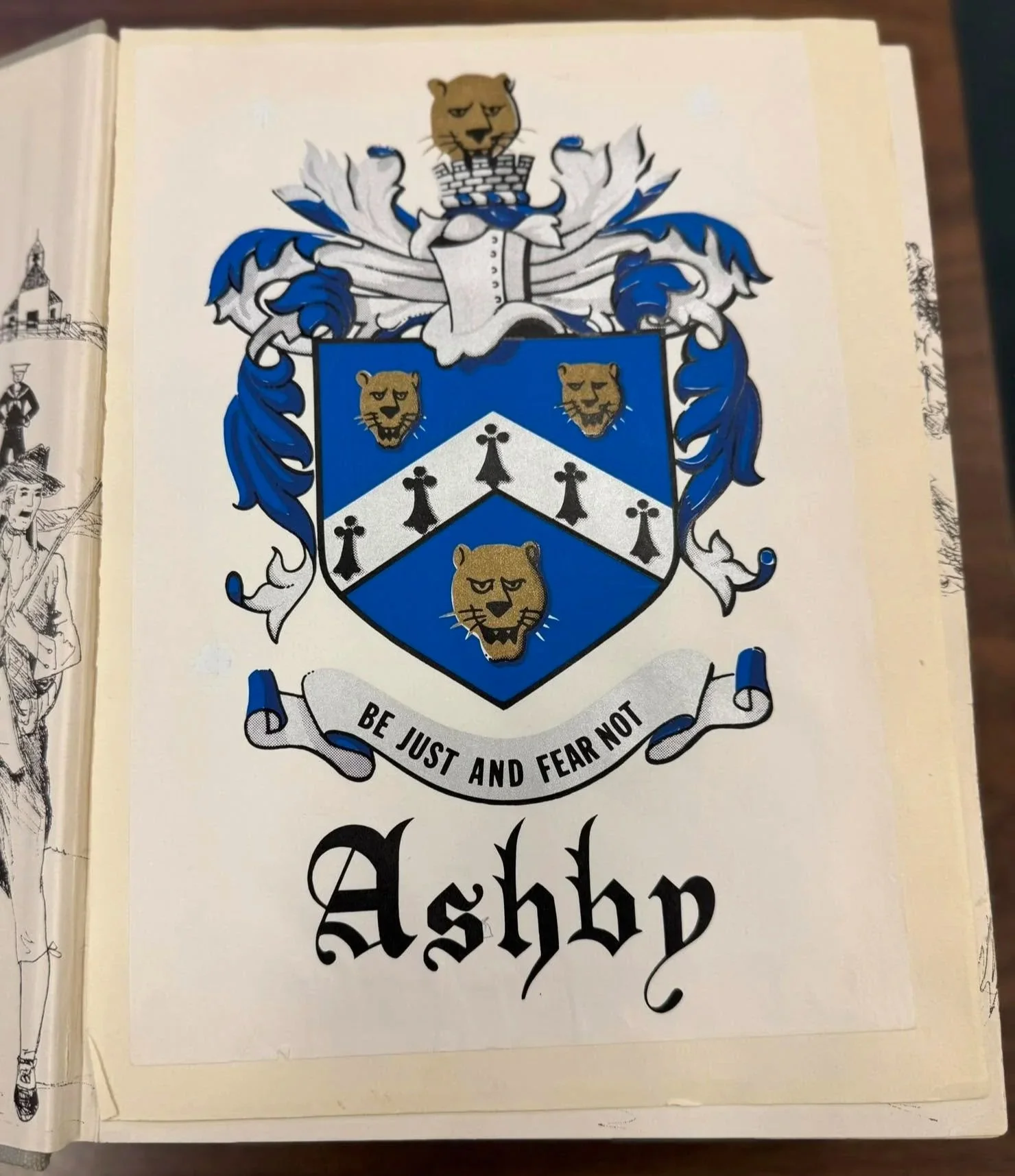
The Ashby family crest, bearing the motto “Be Just and Fear Not.”
John Rufus “Jack” Ashby was the son of Captain Thomas Ashby Sr. and Rosanna “Rose” Berry Ashby. The Ashby family became deeply connected to early Virginia history, particularly the region surrounding Fauquier County, the Blue Ridge Mountains, and the Shenandoah Valley.
The Ashby family motto, “Be Just and Fear Not,” feels especially fitting for this branch of the family. Captain John Ashby lived during a dangerous and uncertain period, when courage was not an abstract virtue but part of daily life.
In older historical accounts, he is often called Captain John Ashby or Captain Jack Ashby. The 1855 account Legends of the War of Independence and the Early Settlements of the West describes him as having been born in Virginia and raised near the Blue Ridge in Fauquier County. The same account remembers him as a man accustomed to farming, hunting, frontier life, and military command.
A Captain on the Virginia Frontier
Captain Ashby came of age in a world very different from ours. Colonial Virginia was expanding westward, and the frontier was often dangerous. Families lived close to uncertainty. Roads were limited. Mountain passes mattered. Forts were not monuments then — they were places of defense and survival.
During the French and Indian War, Captain John Ashby served with Virginia forces on the frontier. Historical accounts connect him with Braddock’s campaign and with the Virginia militia. He was remembered as a captain who commanded men from the mountain regions of Virginia, men described in old sources as tough, independent, and difficult to discipline by ordinary military standards.
That description tells us something important. Captain Ashby was not a polished drawing-room figure preserved in family history because of wealth or title. He was remembered because he belonged to the rough, demanding world of the colonial frontier.
He lived in the places where history was still being made.
George Washington and Captain Ashby
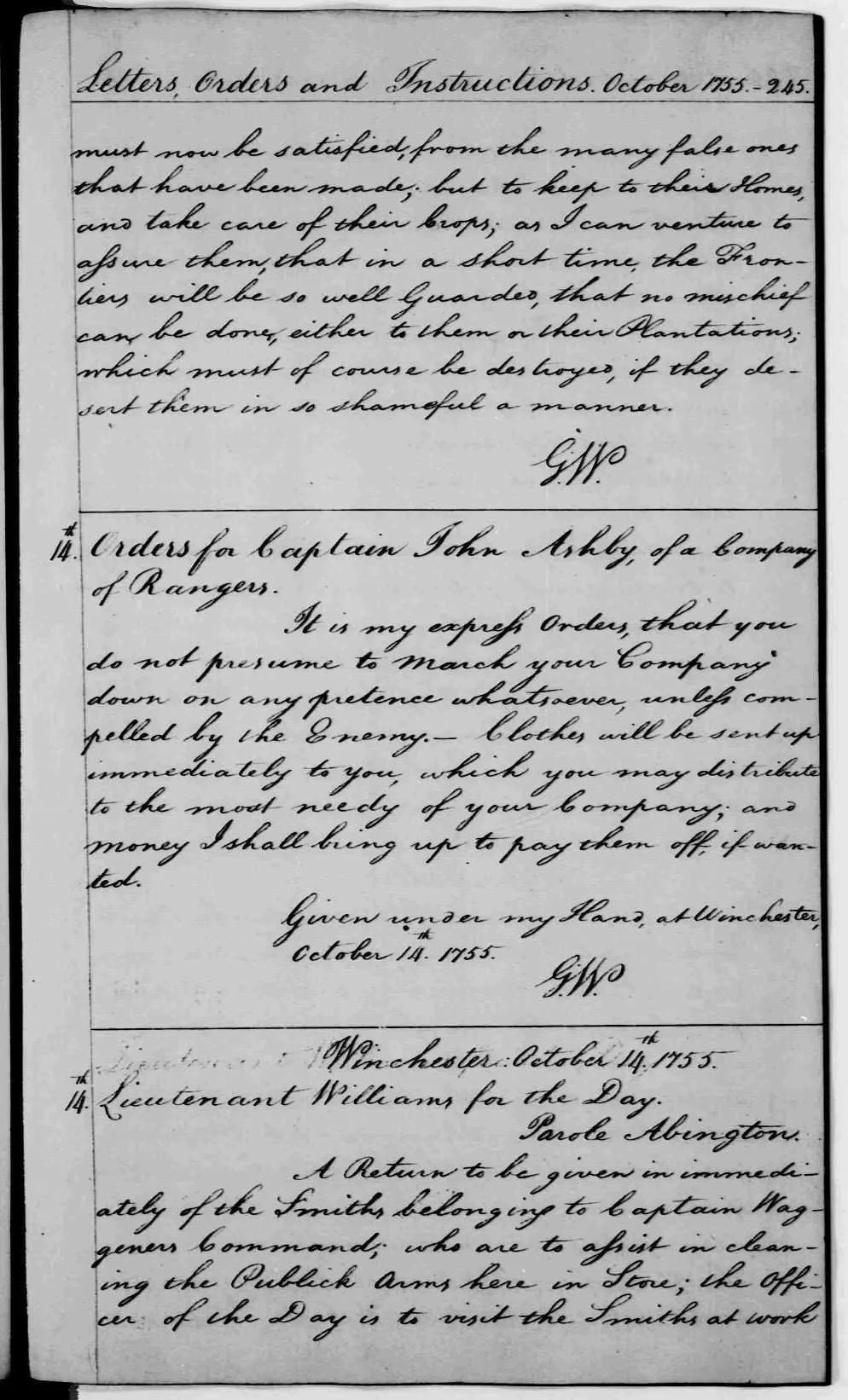
A surviving 1755 letter from George Washington to Captain John Ashby.
Captain John Ashby served as captain of a company of Rangers during the French and Indian War. Surviving George Washington correspondence from 1755 connects Ashby directly to colonial military service on the Virginia frontier.
Source: The Writings of George Washington from the Original Manuscript Sources, 1745–1799, edited by John C. Fitzpatrick.
One of the most remarkable discoveries in researching Captain Ashby is his documented connection to George Washington.
Before Washington became the first President of the United States, he was a young officer serving during the French and Indian War. Surviving letters show that Washington corresponded directly with Captain John Ashby regarding military matters.
For a genealogist, finding an ancestor’s name in any historical record is meaningful. Finding a surviving letter from George Washington addressed to that ancestor is extraordinary.
The letter is not simply a famous name attached to a family story. It is evidence of Captain Ashby’s place in a real historical moment. It shows him as a working officer responsible for men, supplies, discipline, and order during one of the most difficult periods on the Virginia frontier.
That is what makes this ancestor so special.
His story is not just family tradition. Parts of it are written into the records of colonial America.
Fort Ashby
Fort Ashby was part of the colonial frontier world connected to Captain John Ashby’s military service.
One of the most visible pieces of Captain Ashby’s legacy is Fort Ashby, located in present-day West Virginia.
Unlike many ancestors whose homes and landmarks disappeared long ago, Captain Ashby’s name remains attached to a real place. The preserved fort gives his story weight. It turns genealogy into something physical — logs, walls, a roofline, a sign, a location that can still be visited.
When I look at Fort Ashby, I do not just see an old building.
I see a reminder that my family history passed through the frontier. I see a place connected to danger, service, hardship, and endurance. I see the kind of history that makes a name on a genealogy chart become real.
Ashby’s Gap
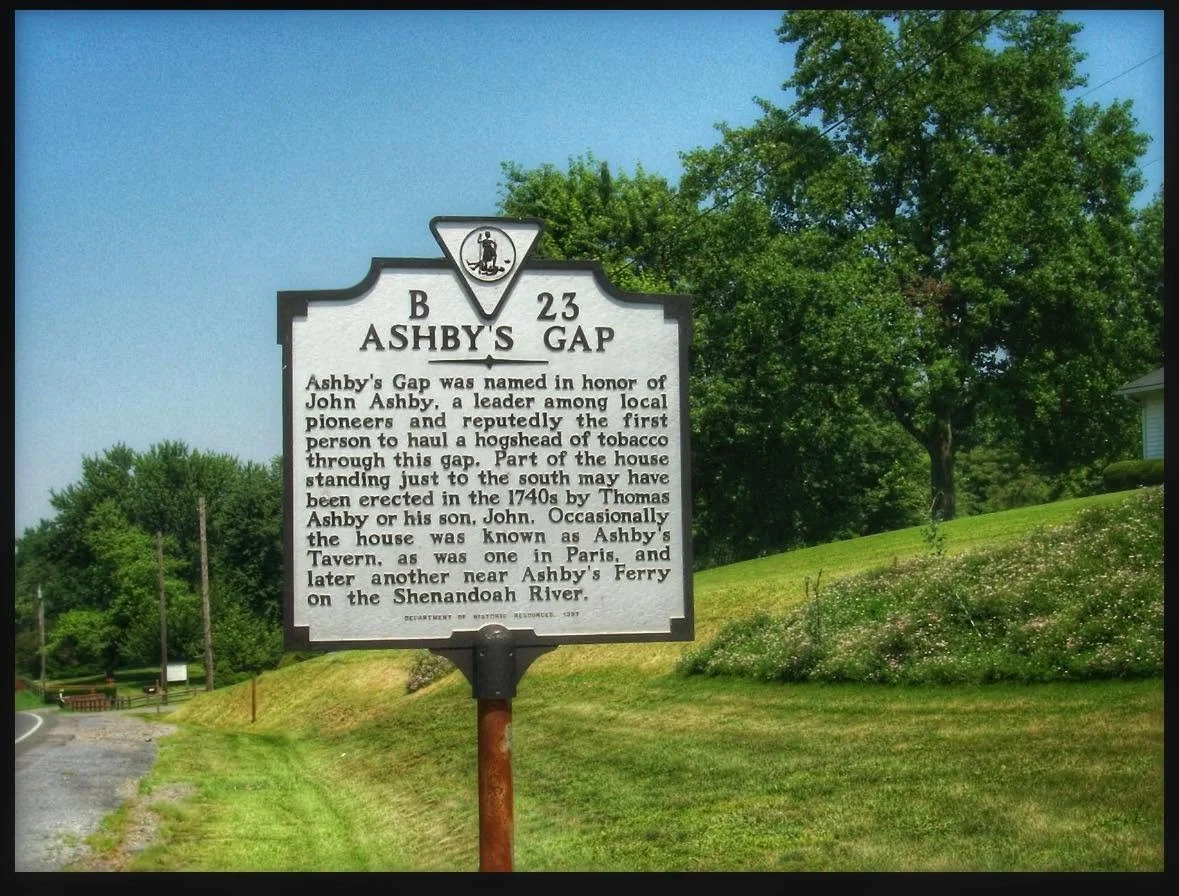
Another place that preserves the Ashby name is Ashby’s Gap in the Blue Ridge Mountains of Virginia.
The historical marker states that Ashby’s Gap was named in honor of John Ashby, remembered as a leader among local pioneers. It also notes that part of a nearby house may have been built in the 1740s by Thomas Ashby or his son John.
This is one of the things I love most about genealogy. Sometimes the past is not hidden in a courthouse or buried in a record book. Sometimes it stands beside a road, on a marker, waiting for someone to stop and read the name.
Ashby’s Gap is more than a location.
It is a reminder that my ancestor’s life was connected to the movement of people through the Blue Ridge, to early Virginia settlement, and to the difficult roads that carried families from one generation into the next.
The Man Behind the Legend
The older stories about Captain Jack Ashby are colorful, dramatic, and sometimes larger than life. The 1855 account presents him as strong-willed, courageous, physically tough, and deeply tied to the frontier culture of his time. It also links him to Braddock’s campaign, to Ashby’s Gap, and to later stories of travel and adventure in the West.
As with many nineteenth-century histories, these accounts must be read carefully. They were written in the language and attitudes of their time. Some details may be family memory, some may be local tradition, and some may be embellished storytelling.
But even when read cautiously, they preserve something valuable.
They show how Captain Ashby was remembered.
He was remembered as a man of action. A man of the frontier. A man whose name remained attached to places, stories, military service, and family memory long after his lifetime.
That kind of legacy is rare.
Researching Captain John Rufus “Jack” Ashby reminded me why genealogy matters so deeply.
We inherit more than names.
We inherit movement. We inherit survival. We inherit questions. We inherit fragments of courage, mistakes, hardship, and resilience. Every document gives us another piece. Every photograph gives us another doorway. Every place name reminds us that someone lived before us, made choices before us, and left traces behind.
Captain Ashby’s story connects my family to colonial Virginia, the Blue Ridge Mountains, Fort Ashby, Ashby’s Gap, the French and Indian War, and the written correspondence of George Washington.
That is the gift of genealogy.
It allows the past to speak again.
And sometimes, it speaks through a fort, a mountain pass, a letter, a family crest, and a name that survived for more than three hundred years.
Sources and Research Notes
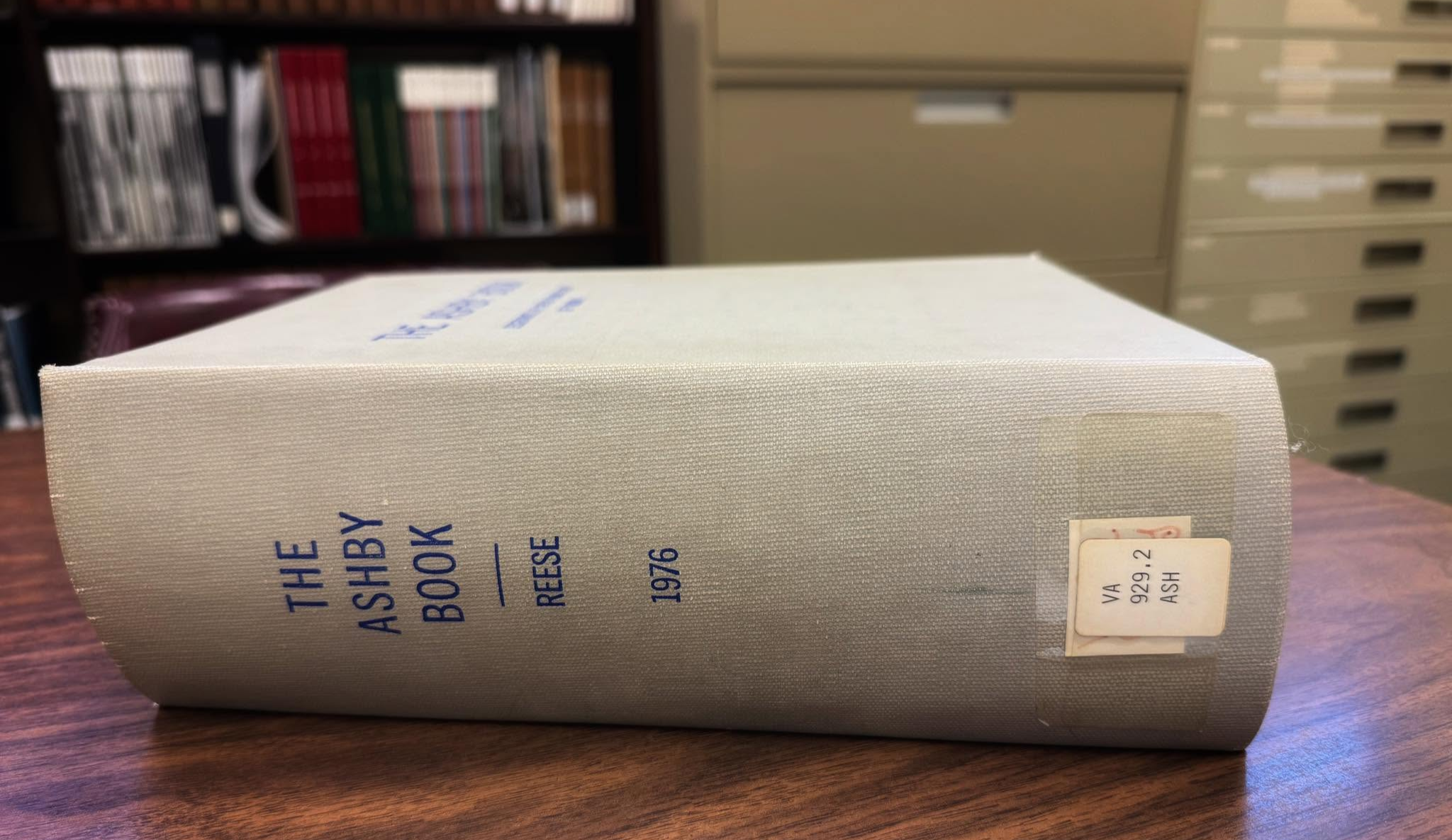
The Ashby Book, one of the family history sources connected to my Ashby research.
Sources consulted for this profile include family records, Ashby family materials, George Washington correspondence, Fort Ashby historical information, Ashby’s Gap historical marker materials, and Legends of the War of Independence and the Early Settlements of the West by Thomas Marshall Smith.
Some older accounts contain language and viewpoints common to the nineteenth century. I have treated those materials as historical sources while presenting this family profile with care and respect.