Following My Mother's Footsteps: Paris and the Meaning Behind the City of Light
Sometimes our connections to the past are found not only in records and photographs, but in the places that once touched the lives of those who came before us.
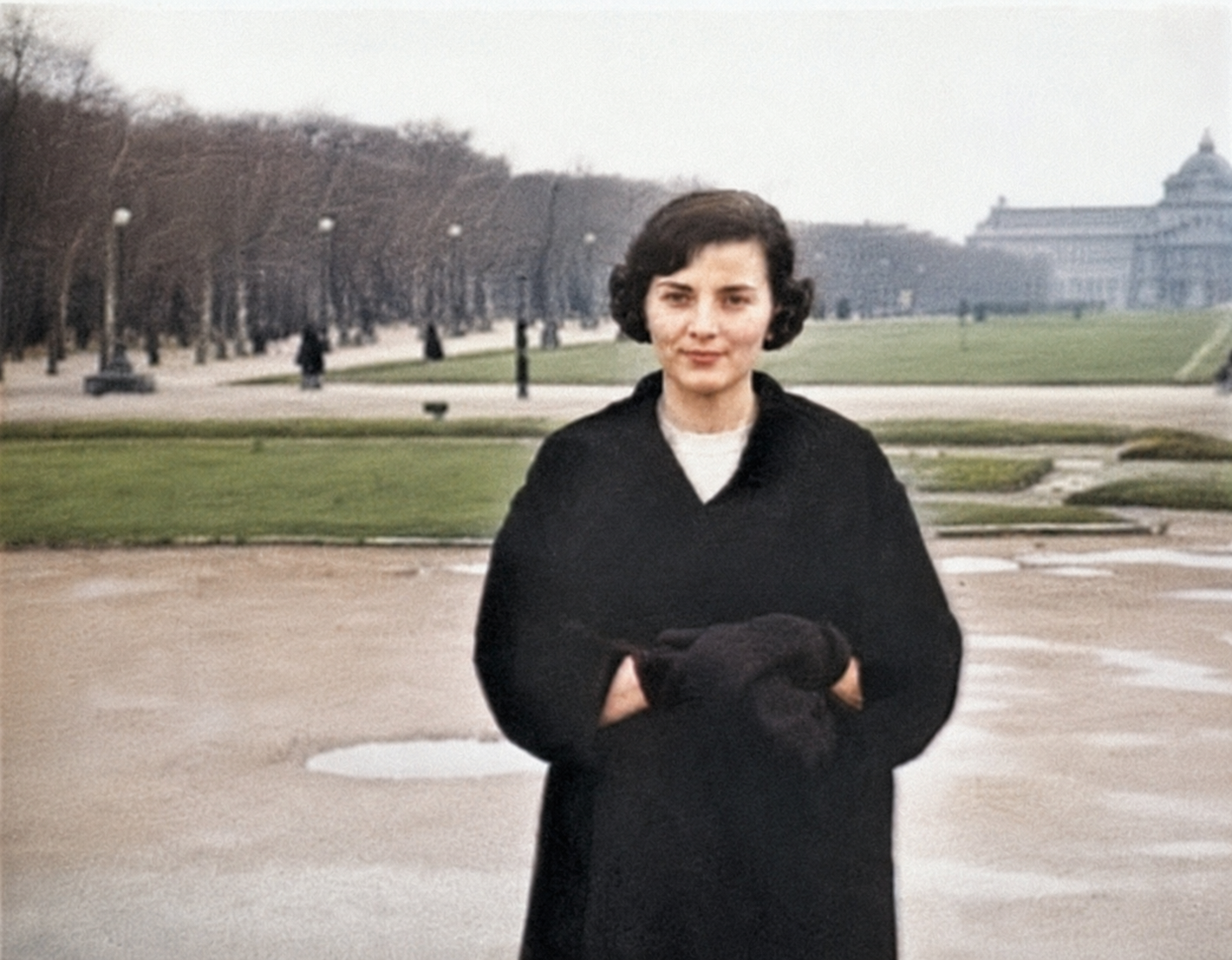
My biological mother in Paris. Although I do not know the exact year, this photograph inspired me to visit some of the same places she once experienced. One of the photographs from the Kodakchrome films given to me by my Aunt Jean from Vancouver, BC
Years before I ever visited Paris, I knew that my biological mother had once walked its streets. Although decades separated our experiences, I found myself wanting to see some of the same places she had seen and experience some of the same sights she had experienced.
Standing where she had once stood, I couldn't help but wonder what she thought when she first arrived. Did she marvel at the grandeur of the city? Did she pause beneath the Eiffel Tower and gaze upward in amazement? Those are questions I may never be able to answer, but they crossed my mind often during my own journey.
We often search for connections in documents, photographs, and family records. Sometimes, however, those connections are found in places. For me, Paris became more than a destination. It became an opportunity to experience a city that had once been part of my biological mother's life and, in some small way, feel closer to a history that can never be completely reconstructed.
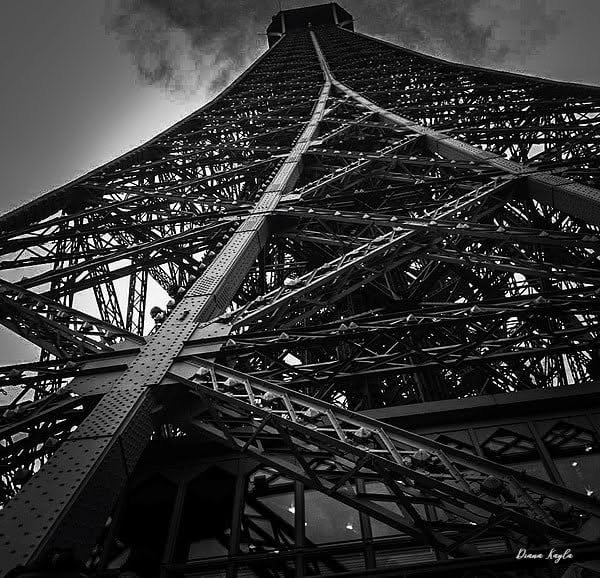
The Eiffel Tower, one of the most recognizable symbols of Paris and perhaps the image most associated with the nickname "The City of Light." Photograph captured by Diana Kayla Hochberg
Misconceptions About "The City of Light"
Before moving forward, it is worth addressing one of the most common misconceptions surrounding Paris's famous nickname. Many people assume that Paris became known as "The City of Light" because of its sparkling boulevards, illuminated bridges, and glittering landmarks, and it is easy to understand why.
Today, Paris boasts more than 296 illuminated monuments and sites, with 33 receiving full illumination each evening. The Eiffel Tower, perhaps the city's most recognizable symbol, has done much to reinforce this impression. Every night, the monument sparkles like a beacon, its display powered by 20,000 bulbs connected by nearly 40 kilometres of wiring. Yet the origins of the nickname have far less to do with modern illumination than most people realize.
How Paris Became “The City of Light”
In the mid-seventeenth century, Louis XIV—better known as Louis the Great (Louis le Grand) and the Sun King (Roi Soleil)—ruled France. Following years of war and civil unrest, the king sought to restore confidence in law and order throughout the kingdom.
On March 15, 1667, he appointed Gabriel Nicolas de la Reynie as Lieutenant General of Police and entrusted him with making Paris safer. Among the reforms introduced was a dramatic expansion of street lighting. Lanterns were installed throughout the streets, while residents were encouraged to illuminate their windows with candles and oil lamps.
The objective was simple. By reducing the number of dark corners and narrow alleys where criminals could hide, authorities hoped to discourage crime and improve public safety. The effort proved so successful that Paris became one of the first European capitals to embrace widespread urban lighting. Over time, it came to be known as La Ville-Lumière—"The City of Light."
The nickname acquired an even deeper meaning during the Age of Enlightenment. From the eighteenth century onward, Paris emerged as one of Europe's foremost centres of learning, culture, and innovation. Writers, philosophers, scientists, engineers, and artists flocked to the French capital, drawn by an atmosphere that encouraged the exchange of ideas and the pursuit of knowledge.
In that sense, Paris earned its title not merely because its streets shone after dark, but because its ideas helped illuminate the world.
Decades after my mother's visit, I stood beneath the same tower and carried home memories of my own.
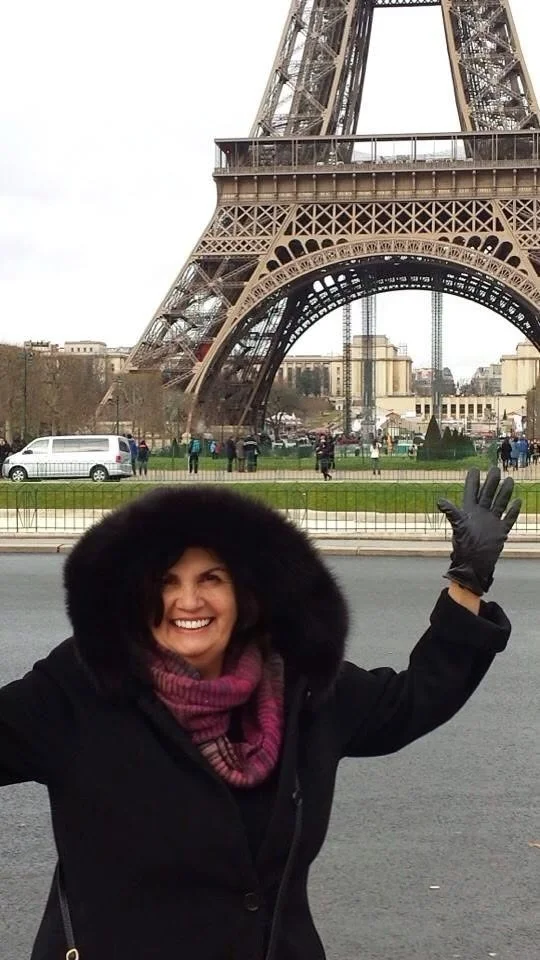
Standing beneath the Eiffel Tower, grateful for the journey and the memories it created.
Photograph captured by Brent Corbie.
Final Reflection
As I stood beneath the Eiffel Tower, I realized I wasn't simply visiting Paris. I was experiencing a city that had once meant something to my biological mother.
We were separated by decades and lived very different lives, but for a moment we shared the same skyline, the same streets, and perhaps even some of the same feelings. Although I may never know what she thought as she walked through Paris, I like to believe that she, too, paused to admire its beauty and carried those memories with her long after she returned home.
Long before I learned why Paris became known as La Ville-Lumière, I had already discovered what illuminated it most for me. It wasn't the monuments, the bridges, or the lights that sparkle each night. It was the quiet connection between past and present, and the realization that sometimes we find pieces of ourselves in the places that once touched the lives of those who came before us.
Perhaps that is what makes travel so meaningful. We journey to see the world, but occasionally, if we are fortunate, we also discover something about ourselves.
And in Paris, I found more than the City of Light. I found another thread in the story that connected us.